Planning
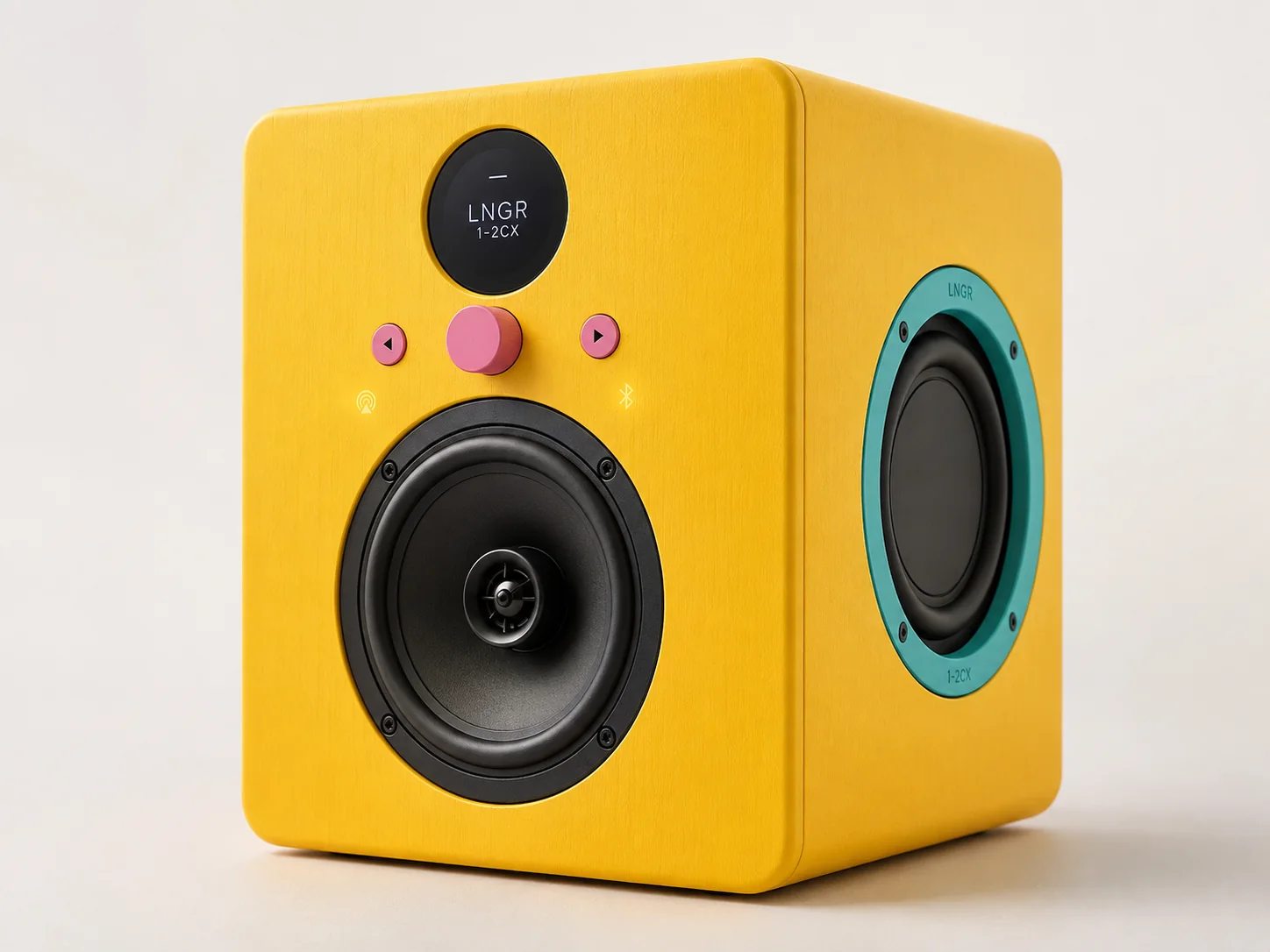
P1 retains the 320 × 320 × 300 mm cabinet in 15 mm birch plywood, side passive radiators, an 8-inch coax concept and a deliberately reduced control layout. The 3.4-inch round display is used for volume indication, with one encoder and two AirPlay/Bluetooth buttons. The current computer is a Raspberry Pi 3A with a 64 GB card; Spotify Connect via librespot remains on the software roadmap.
Simulation
Passive-radiator mass, active crossover, EQ and limiter values are not treated as final P1 parameters yet. Earlier P0/P0.2 assumptions are not carried forward blindly because the computer, display, controls and driver decision have changed.
Build
Core hardware is already present: Raspberry Pi 3A, 64 GB card, buck converter, GPIO header, fuse holder, KYCON DC inlet and the 3.4-inch display. The next mechanical gate is the P1 CNC state after checking the real coax driver.
Measurements
The first prototype will be checked for passive-radiator tuning, LF/HF near-field response, crossover phase/delay, limiter behaviour, thermal performance and wireless operation.
Changes
P0.2 remains available as a development archive but is not a current manufacturing release. P1 uses the round 3.4-inch display, a separate encoder without an LED ring, two function buttons and the Raspberry Pi 3A.
Result
The current result is a frozen control/cabinet concept with real core hardware, not a finished and measured loudspeaker. P1 closes only after a mechanical prototype, acoustic alignment and functional validation.